How to host math bingo
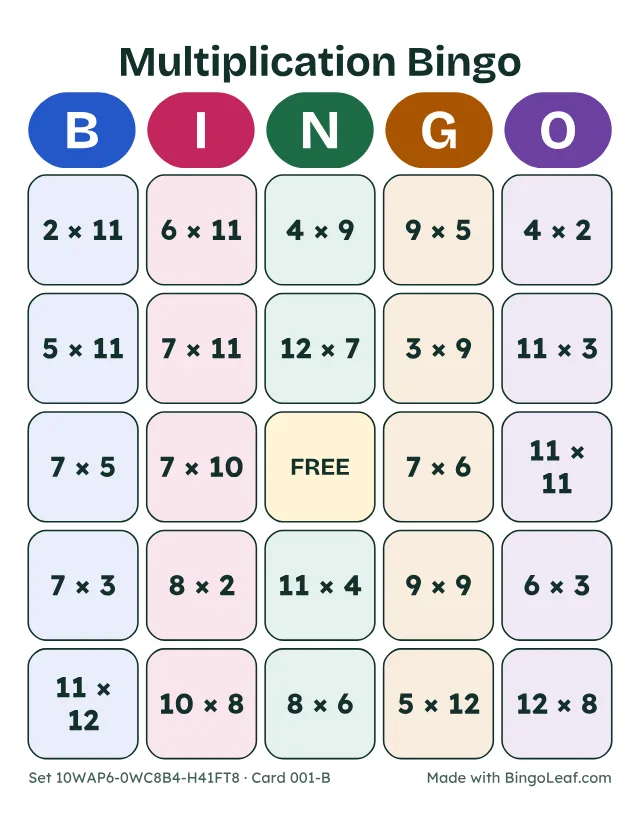
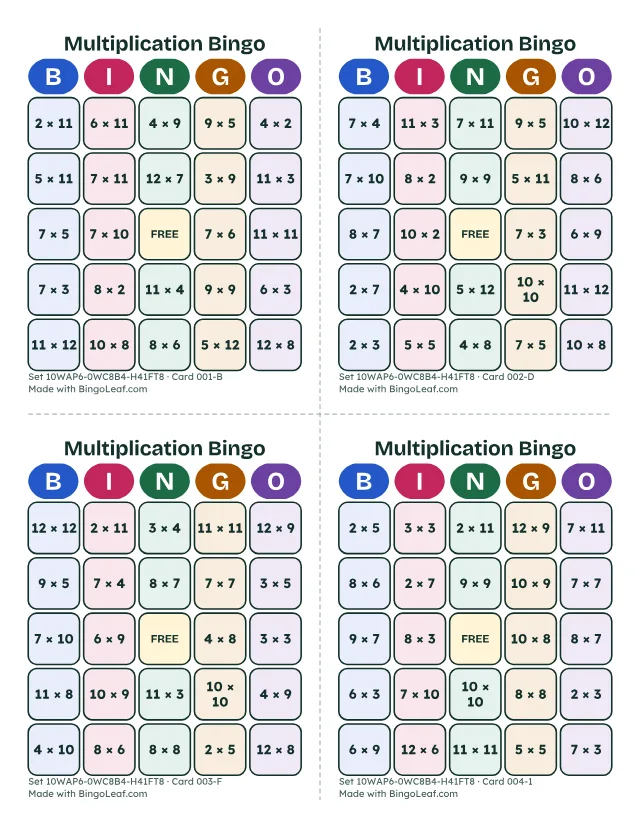
Math bingo is a fact-fluency game that feels like a break. The reverse format, where cards show facts and you call answers, makes students recall several facts for every number you call.
- Call the answer, not the fact. Read the next fact from the call sheet in your head, say only the answer, and give students a few seconds. A pause of five seconds works for most fourth graders.
- Write called answers on the board. It lets students who drifted off catch up and gives you a record when someone calls bingo.
- Check by working backward. The student reads each fact in the winning line with its answer, such as “7 times 8 is 56”, before the win counts.
- Repeat with a new set. Print a second set for next week. Mixing the facts each time stops students from memorizing where squares sit.
For a mixed-level class, give students who are still learning the 6s, 7s and 8s a 4×4 card, and fast students the full 5×5. Everyone listens to the same called answers.
Ways to play it
- Number cards instead. For place value and number recognition with younger students, use printable 1–75 number cards.
- Reading in the same format. The sight word bingo page runs the same game for early readers.
- Times-table focus. Delete every fact except one table, add a few review facts, and play a quick round on that table alone.
- Partner check. Students play in pairs on one card and must agree on each answer before marking it.