How to host human bingo
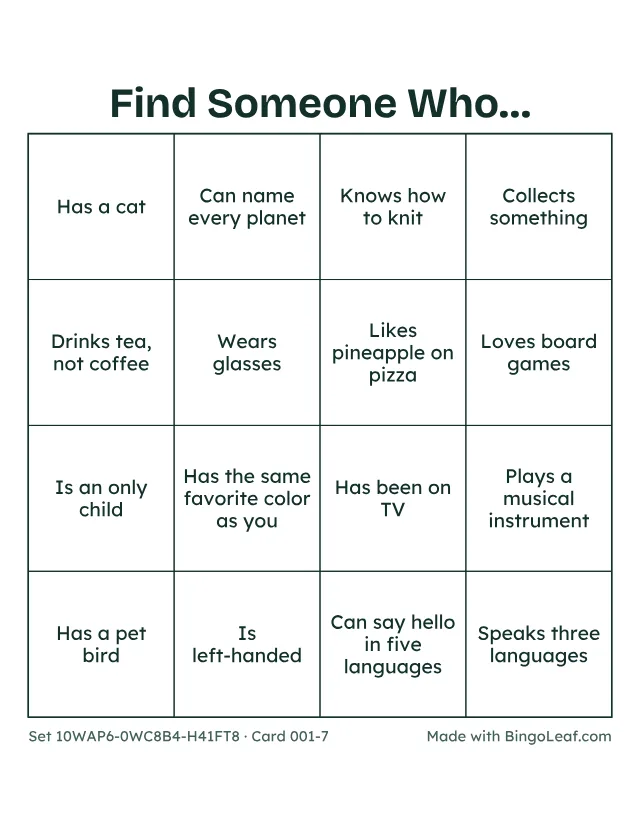
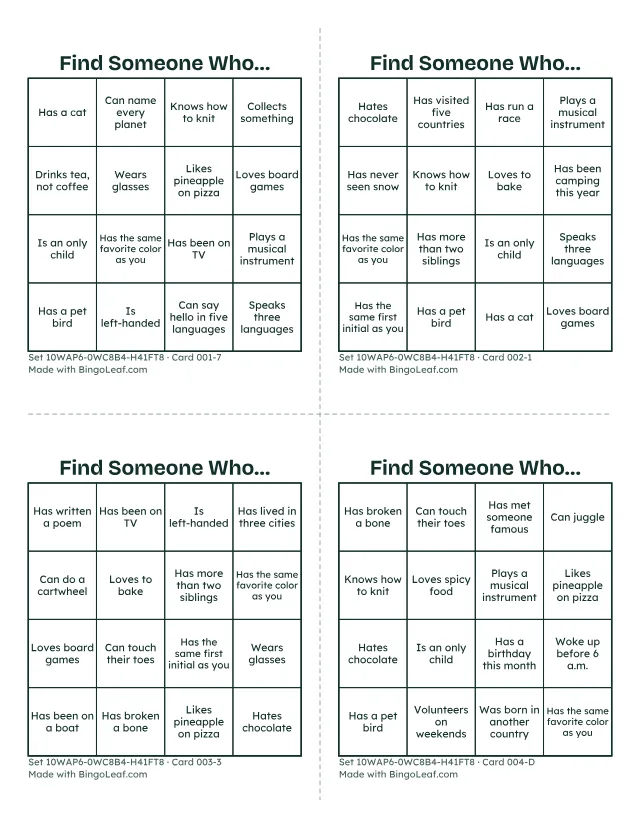
Human bingo, also called find-someone-who bingo, is an icebreaker rather than a calling game. There is no caller: players mingle and collect signatures from people who match their squares.
- Give it a time limit. Ten to fifteen minutes is enough for a class or a workshop of 30 people. Ring a bell at the end.
- Set the signature rule. One square per person is the usual rule. Say it out loud before you start so nobody fills a card from one friend.
- Ask players to share. After the game, ask a few winners to introduce one interesting person they met. The answers are often the best part.
- Have pens ready. Every player needs something to write with, and a clipboard or a hard book helps when people sign standing up.
On the first day of school, edit the list for your age group: younger children can match simple prompts like “Has a dog”. For adults, add questions about the job or the event, such as someone who traveled the farthest to attend.
Ways to play it
- Team version for work. Pair this with office bingo at an offsite: human bingo in the morning, meeting bingo at the review.
- Party icebreaker. At a birthday where guests are strangers, play one round before the birthday bingo game.
- Blank prompt cards. Print blank bingo cards and let a class write their own prompts for the next group.
- Language practice. Write the prompts in the language you teach, so students have to ask each question out loud.